
How to Verify Material Safety Standards for Space Blanket Bulk Imports
- YEYETAC™

- Feb 24
- 7 min read

We often focus on the price of the product and forget the cost of the paperwork. Importing medical gear into Europe is getting harder every year. If your compliance documents are wrong, your goods get stuck at customs. This costs you time, money, and your reputation.
To verify safety standards for space blanket bulk imports, you must ensure compliance with the EU Regulation 2017/745 (MDR). Even though they are simple foil sheets, they are Class I medical devices. You need to check for a valid CE mark, a Declaration of Conformity (DoC), and specific labeling like the UDI and Authorized Representative details.
Many buyers think a space blanket is just a piece of plastic. The European Union disagrees. If you treat this lightly, your container will never leave the port.
Is a simple thermal blanket a medical device?
You might see these blankets in toy stores or camping shops. But when you sell them for first aid kits or to rescue teams, the rules change completely.
Yes, under EU law, a space blanket used for heat retention in emergencies is a Class I Medical Device. It falls under Rule 1 of Annex VIII in Regulation (EU) 2017/745. It is non-invasive and non-sterile, but it is still a strictly regulated medical product.
Let’s break down why a simple sheet of foil is treated like a scalpel or a bandage in the eyes of the law.
First, we must look at the Intended Use.
The heat-reflective emergency blanket is designed to retain body heat in cold environments, shield against rain and wind, or provide shade in extreme heat. They are usually made from PET (Polyethylene terephthalate) or PE (Polyethylene). Because the intended purpose is the prevention of hypothermia (a medical condition) and survival, it fits the definition of a medical device.
According to Regulation (EU) 2017/745 (MDR), we look at Annex VIII.
Specifically, Rule 1 states: "All non-invasive devices are classified as class I, unless one of the rules set out hereinafter applies."
Since a space blanket does not penetrate the body (non-invasive), does not touch open wounds directly (usually), and does not measure vital signs, it is a Class I Device.
What does this mean for you as a buyer? It means you cannot just buy "camping foil" from a random factory and sell it to a hospital in Poland or Germany. You need to verify that the manufacturer acknowledges this classification. If the supplier tells you "it is just outdoor gear" to avoid paperwork, you are taking a huge risk.
If a user gets hypothermia because the blanket failed, and you sold it as a medical device without the proper classification, you are liable. You can read the full regulation text here: Regulation (EU) 2017/745
How do you spot a non-compliant product instantly?
You do not need a laboratory to check the first layer of compliance. You just need to look at the back of the package with your own eyes.
A compliant package must have four things: The CE Mark, the Manufacturer's details, the European Authorized Representative (EC REP) symbol, and the UDI (Unique Device Identification). If any of these are missing, the product is illegal to sell in the EU market.
When I send samples to my clients in Europe, I always tell them to inspect the label first. This is the "passport" for the product. If the passport is fake, the product does not get in. Here is a checklist you can use when evaluating a space blanket bulk order:
Protection is also part of the law.
The regulation states that packaging must protect the device during transport and storage. The space blanket performs because of its reflective coating. If the packaging is thin and cheap, friction during shipping can rub the coating off. If the coating is gone, the blanket does not reflect heat. Therefore, the quality of the plastic bag (the packaging) is actually a regulatory requirement to ensure the device keeps its performance.


Why does the Declaration of Conformity matter?
Winning a government tender is not just about having the lowest price. It is about proving you are safe. Paperwork is what wins contracts.
The EU Declaration of Conformity (DoC) is the manufacturer's pledge that they follow all laws. Without this, you cannot clear customs. For big tenders, you also need Technical Files and Test Reports to prove quality control.
Let’s talk about the business side of compliance. Many of my clients are bidding for military or government contracts. The procurement officers are strict. They will ask for the EU Declaration of Conformity.
By drawing up this document, the manufacturer assumes full responsibility for compliance with the Regulation. It is a legal promise. If a supplier cannot give you a DoC, do not buy from them. It means they are not confident in their product, or they are hiding something.
How does comprehensive documentation secure your project success?
If you plan to bid for government tenders or supply large institutional projects, the paperwork from your partner determines the speed of your progress.
When you participate in large-scale projects or tenders, auditors review the technical files for every component in the kit. If your supplier provides a complete set of documents—including Test Reports, DoC, and Standards Adherence—you drastically increase your chances of passing the review and winning the bid.
In the professional medical market, the space blanket is rarely sold alone. It is usually one specific component inside a larger Trauma Kit or IFAK (Individual First Aid Kit).
When you prepare a bid for a military contract or a hospital tender, you are not just selling a bag; you are selling a system. The auditors or project managers will check the "Technical File" for every single item inside that bag. They need to verify that every component meets the safety standards.
If you have a partner who provides the full documentation package upfront, your workflow becomes efficient. You can present a complete technical file to the tender committee immediately.
A complete Documentation Package for a project usually requires:
Declaration of Conformity (DoC): A signed legal statement that the product meets EU laws.
Technical Test Reports: Proof of material strength, thickness, and thermal retention from a lab.
Standards List: Confirmation that the product meets specific ISO or EN standards.
Quality Management: Proof of ISO 13485 (Medical Devices Quality Management) compliance.
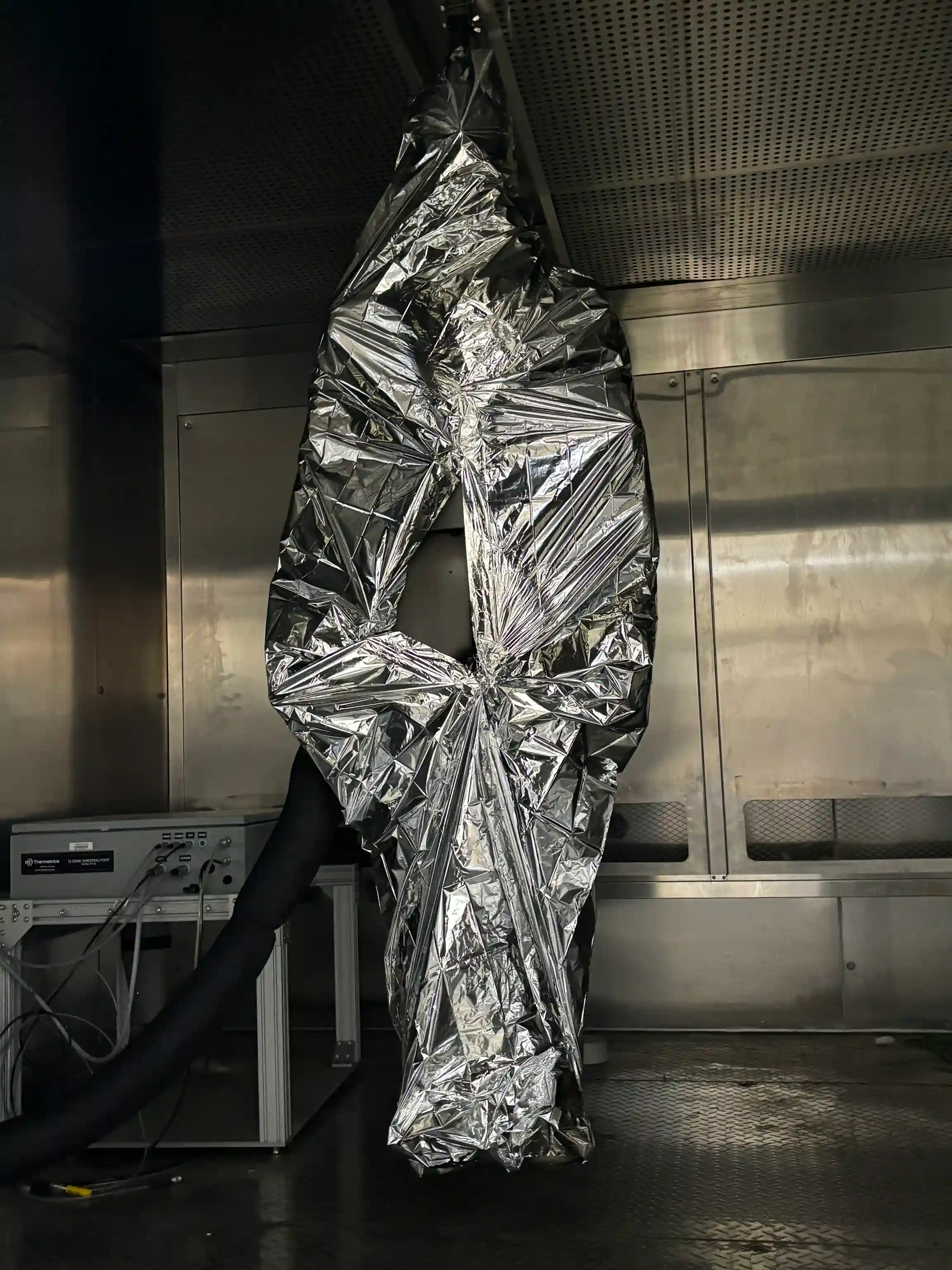
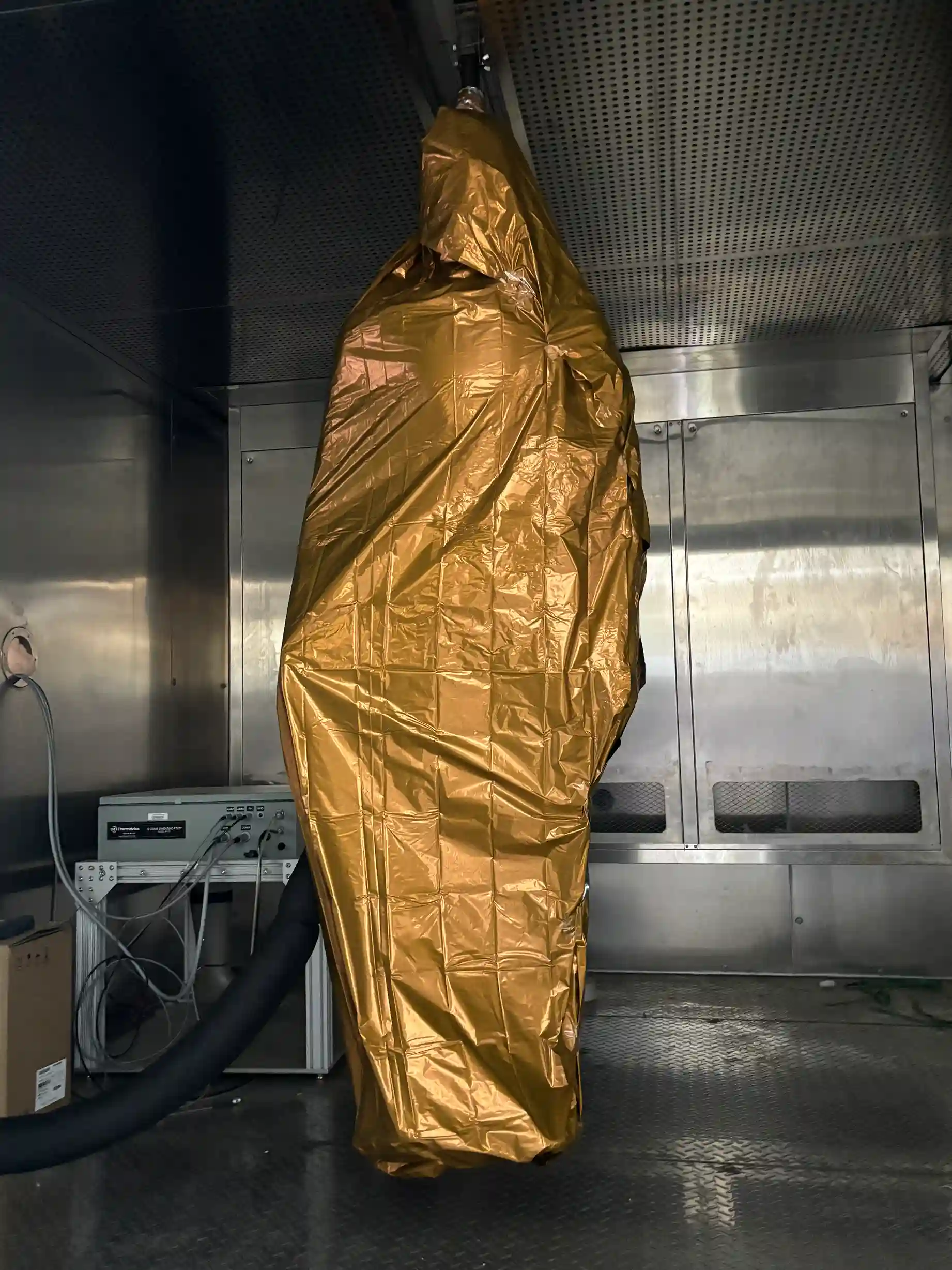
Why choose YEYETAC™ for your tender projects?
We do not just sell you a blanket; we sell you the "invisible" product—the documentation.
The Customs Barrier: If your product does not conform to the MDR, it will be seized at customs. We ensure all our space blanket bulk shipments have the correct EC REP and UDI data so they flow smoothly into Poland, Germany, or Lithuania.
The Tender Advantage: When you bid for a project, you often need to submit technical data sheets. We provide:
Technical Files: Detailed specs material
Test Reports: Proof that the material is safe and effective.
Confidentiality: We sign NDAs. We know you are competing against others. We protect your source.
Local Registration: We assist you with the data needed for local medical device registration in your country. We understand that you want to beat your competitors. The best way to do that is to have a supplier who is not just a factory, but a compliance partner. We keep our prices competitive, but our paperwork is premium. This combination helps you win the award.
At YEYETAC™, we treat the documentation as a core part of the product. We ensure that when you are ready to bid for a project, you have all the necessary files to support your submission. This turns the space blanket from a simple accessory into a compliant, project-ready component that strengthens your overall proposal.
Conclusion
Compliance is not optional; it is your ticket to the market. Check the MDR rules, verify the UDI and CE mark, and choose a factory like YEYETAC™ that provides the full technical file to help you win tenders.
FAQ
Is the emergency space blanket officially considered a medical device?
Yes. Under the EU Regulation 2017/745 (MDR), the emergency space blanket is classified as a Class I Medical Device (Rule 1, Annex VIII) because its intended use is to prevent hypothermia.
Can I customize the label with my own brand and logo?
Yes, we offer private labeling services. You can use your own design for the insert card or the plastic bag printing. The Minimum Order Quantity (MOQ) for custom labels is usually 2,000 pieces.
Do you provide the Declaration of Conformity (DoC) for tender submissions?
Yes. For all our medical partners and tender participants, we provide a full technical file, including the EC Declaration of Conformity, technical data sheets, and CE certification to support your bid.
What is the standard thickness of your space blankets?
The industry standard is 12 microns. However, we can customize the thickness (e.g., thicker material for higher durability) based on your specific project requirements.
Can you offer "Tactical" colors for military use?
Yes. While the standard is Gold/Silver or Silver/Silver, we manufacture Olive Drab (OD Green) / Silver blankets specifically for military and tactical medical kits to ensure camouflage discipline.
Is the packaging suitable for automatic assembly lines?
Yes. We can provide the blankets in bulk with specific folding dimensions (flat-folded or vacuum-packed) to fit perfectly into your IFAK pouches or assembly line machines.
Can we print our logo directly on the foil material?
Yes, it is possible to print a repeating pattern of your logo on the blanket itself. However, this requires a printing cylinder and has a higher MOQ compared to just customizing the paper label.
What is the shelf life of these blankets?
When stored in their original, undamaged packaging away from direct sunlight, the standard shelf life is 5 years.
Do you support small trial orders for quality testing?
Yes. We understand you need to verify quality first. For standard neutral packaging, we accept smaller trial orders. For custom branded orders, we need to meet the MOQ of 2,000 units.
Does the product come with a Unique Device Identifier (UDI)?
Yes. As a compliant manufacturer, our packaging includes the UDI barcode required for traceability within the EU and US markets.


Comments