
Why Every Soldier Needs an Extra-Large Survival Blanket in Medical Kit

Updated: Jan 12
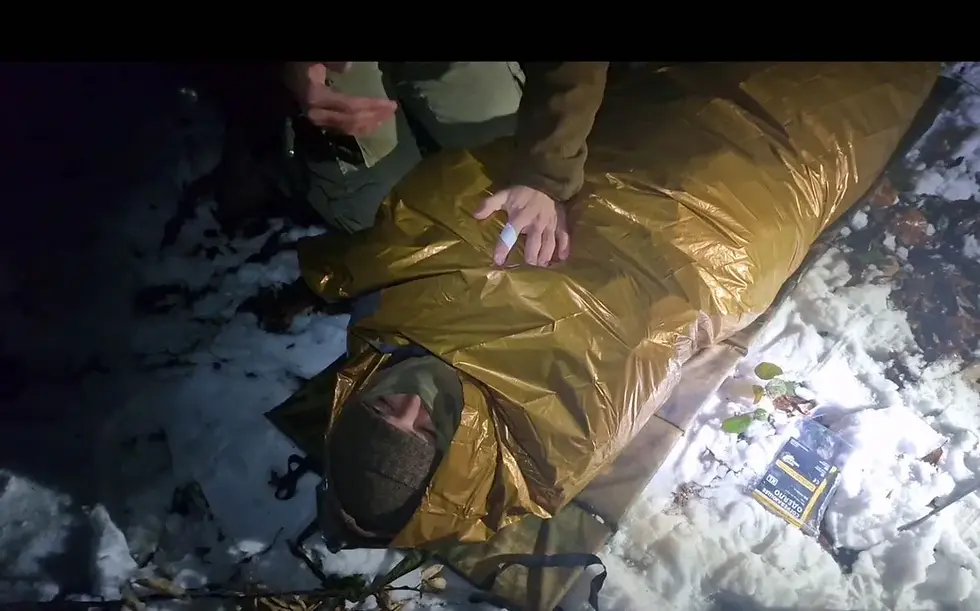
Survival blankets are essential life-saving tools in a soldier's kit. Extra-large survival blankets specifically designed for military use offer significant advantages over standard civilian versions. These specialized tools measure approximately 7' × 5' or larger, compared to the typical civilian versions measuring just 4.5' × 7'.
Military-grade survival blankets have evolved from thin mylar sheets to reinforced tactical blankets with specialized coatings and enhanced durability. The extra size provides full coverage for a fully-equipped soldier, which is crucial when every inch of coverage can make the difference between life and death in extreme conditions.
The Science Behind Survival Blanket Effectiveness

Extra-large survival blankets work by reflecting up to 90% of radiated body heat back to the user, creating an effective thermal barrier. This reflection prevents heat loss in cold environments, which can lead to hypothermia, that a significant threat to wounded soldiers.
Military-specific advancements include:
Multi-layer construction with tear-resistant substrates
Reinforced edge seams to prevent tearing
Specialized coatings to reduce noise
Non-shine tactical finishes for reduced visual signature
The larger size directly impacts effectiveness by creating a more complete thermal envelope. Standard-sized blankets often leave extremities exposed, resulting in continued heat loss.
Medical Applications on the Battlefield
In TCCC (Tactical Combat Casualty Care) protocols, these blankets fulfill multiple critical roles:
Creating a thermal barrier during assessment and treatment
Maintaining body temperature during hemorrhage control procedures
Providing a sterile barrier between wounded personnel and contaminated environments
Facilitating casualty movement while maintaining thermal protection
Medical research shows that maintaining normal body temperature significantly improves survival rates for trauma patients. Each degree of temperature drop below normal dramatically increases mortality rates.
Tactical Advantages of Extra-Large Size

Modern soldiers carry 60-100 pounds of gear, significantly increasing their physical dimensions. Extra-large blankets accommodate this reality, providing full coverage despite bulky equipment.
In mass casualty events, larger blankets offer tactical advantages:
Ability to cover two casualties simultaneously when resources are limited
Creating larger protected treatment areas in adverse conditions
Accommodating both patient and medic during prolonged procedures
The increased coverage ensures better heat retention due to improved wrapping techniques. More complete enclosure means fewer heat-loss points and better temperature regulation.
Beyond Medical Use: Survival Applications
Extra-large survival blankets function as multi-purpose survival tools:
Emergency Shelter: The extra material allows for robust shelter designs capable of accommodating equipped personnel
Water Management: Rain collection systems and moisture collection from vegetation
Ground Insulation: Complete coverage prevents conductive heat loss
Signaling: Increased surface area improves visibility for both visual and IR/radar detection
Strategic Placement and Carry Considerations
Optimal placement includes:
External pouch on individual first aid kit (IFAK)
Dedicated pocket in medical assault packs
Standardized location across unit-level medical kits
Modern military-grade blankets compress to small packages, typically 3"× 2"× 1" when folded. The weight penalty is minimal, usually less than 4 ounces for premium models.
For squad and platoon operations, recommended distribution includes:
One extra-large blanket per soldier in IFAK
Two spares in squad-level medical kit
Five additional in platoon-level medical resources
Selection Criteria
When selecting extra-large survival blankets for military use, key specifications include:
Minimum dimensions: 7' × 5' (recommended 8' × 6' for optimal coverage)
Material thickness: at least 12 microns (civilian versions often use just 2-3 microns)
Tear strength: minimum 15 lbs pull force along all axes
Reflectivity: minimum 90% heat reflection rate
Weight: under 6 ounces for practical field carry
Conclusion
Extra-large survival blankets represent a critical life-saving tool that deserves priority placement in every soldier's medical kit. Their enhanced coverage, durability, and versatility directly impact survivability in both combat and survival scenarios. The minimal weight and volume penalty is far outweighed by the significant advantages in casualty treatment, hypothermia prevention, and multi-purpose utility.
Get the Link of the extra-large survival blanket.
Click here to get tips to choose the right mylar blanket supplier for bulk orders.
FAQs
How much bigger should a military survival blanket be compared to standard versions?
Military survival blankets should be at least 30% larger than standard versions, with recommended dimensions of 7' × 5' minimum, and ideally 8' × 6' for complete coverage of equipped personnel.
What is the optimal carrying method to ensure quick access in combat situations?
The blanket should be carried in an external pocket of the IFAK or in a dedicated pouch on load-bearing equipment, folded in a standardized pattern that allows one-handed deployment.
How do camouflage survival blankets compare to metallic ones for military use?
Camouflage blankets provide better tactical concealment but typically offer 10-15% less heat reflection. The optimal choice depends on mission parameters and whether concealment or maximum heat retention is the priority.


Comments