
How do you ensure canine safety and performance during outdoor sports?
- YEYETAC™

- Dec 9, 2025
- 5 min read

We often push our dogs to the limit in canicross or hunting, forgetting they cannot speak to tell us they are hurting. A fun run can turn into a medical emergency in minutes without the right preparation.
To ensure safety, you must monitor hydration signs like dry gums, actively manage body temperature with cooling strategies, and carry a specialized K9 trauma kit. This kit should include splints and bandages, and you must have an evacuation plan involving a portable stretcher for heatstroke or fractures.
Many owners ignore the subtle signs of distress until the dog collapses. Whether you are hiking deep in the woods or competing on a track, the difference between a recovery and a tragedy often comes down to the gear on your back and the knowledge in your head.
What are the critical signs of dehydration you might be missing?
A dehydrated dog cannot perform and risks severe organ failure during high-intensity activity. You might not notice the danger until your dog stops running. The most dangerous red flags are dry, sticky gums and excessive, heavy panting. You must begin hydration protocols hours before the event starts. If a dog refuses water due to stress, adding fish oil or a tasty treat to the water can trigger their drinking instinct.
Hydration is not just about giving water when the dog is thirsty; it is about preemptive care. In my experience working with tactical dog handlers. The most reliable test is checking the gums. They should be pink and wet. If they are dry or tacky, you are already in the danger zone.
You need to encourage drinking well before the race or hike begins. A great trick I use is to squeeze a capsule of fish oil or drop a small piece of freeze-dried meat into their water bowl. The scent makes the water irresistible.
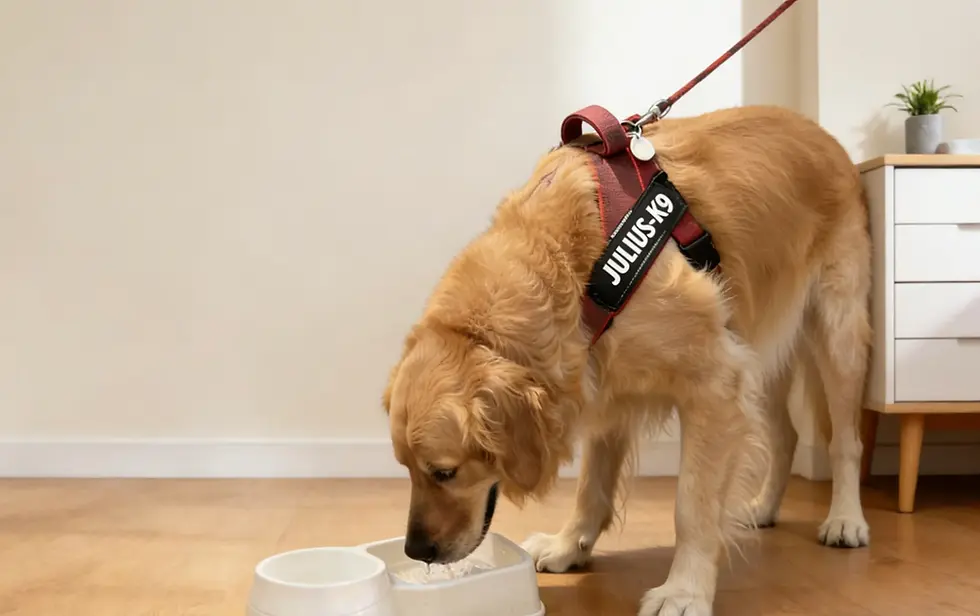
Besides water, you can supplement their fluid intake by feeding fruits with high water content, like watermelon (without seeds) or apples, before the event.
However, be careful not to engage in heavy exercise immediately after a large volume of water or food to avoid bloat. Always carry a collapsible bowl and bottled water. Do not rely on natural streams, which can contain parasites. Your goal is to keep their tank full so they can cool themselves down through panting.
How should you manage heatstroke and emergency extraction?
Heat kills dogs faster than you think. Overheating during canicross or summer operations is a silent killer that shuts down the brain and muscles. Immediate cooling is vital; you must wet the fur or use a cooling bucket to lower their temperature. If heatstroke hits or an injury occurs, you need a portable K9 stretcher to move the dog immediately, as forcing them to walk can be fatal.
If your dog slows down, looks confused, or pants with a wide, flat tongue, you must stop immediately. In professional training, we use cooling buckets to soak the dog's body. If you are on a trail, get them into the shade immediately. Wet their paws and underbelly with your reserve water. This evaporation mimics sweating and lowers their core temperature.
However, sometimes cooling is not enough. If a dog collapses from heat or breaks a bone, you cannot carry a 30kg dog in your arms for five miles. This is why I always emphasize the need for a lightweight stretcher.

We see professional teams preparing for this. If a dog suffers a fracture or severe heatstroke, you need to immobilize them and carry them out.
A soft, foldable stretcher takes up very little space in your pack but allows two people to carry a heavy dog safely. It prevents further injury to the dog and protects the handlers. Being able to "extract" your dog is just as important as being able to treat them.
What exactly belongs in a combat ready dog first aid kit?
Being miles from a vet with a bleeding dog is a nightmare scenario. You cannot fix a torn paw or a deep laceration with just a human band-aid. Your kit must be lightweight, MOLLE compatible, and specifically stocked for canine anatomy. It needs tools like tick removers, splints for fractures, and self-adherent bandages that do not stick to fur, ensuring you can stabilize injuries on the spot.

We need to talk about the gear itself. The best kit is the one you actually carry. It needs to be compact. I prefer designs with a MOLLE system or a carabiner so I can clip it to my waist or the outside of my rucksack.
Some intelligent designs even combine a human and dog kit into one pouch to save space.
Inside, the supplies must be specific. A dog's paw injury is the most common issue in the field. You need bandages that can wrap a paw tightly to stop bleeding but won't pull out hair when removed. If a leg is broken, a malleable splint is essential to stabilize the bone until you reach a vet.
Here is the checklist I recommend for a complete K9 field kit:
Don't forget to pack small bags for waste and treats. The treats are not just for rewards; they are a medical tool to distract the dog while you pull out a thorn or wrap a bandage. Preparation means having these tools within arm's reach, not buried in the trunk of your car.
Conclusion
Whether hiking or competing, your dog trusts you with its life. Hydrate early, watch the heat, and carry a professional kit to handle the risks of the wild.
FAQs
Besides plain water, should I give my dog electrolyte drinks after exercise?
Only use pet-specific electrolyte solutions if recommended by a vet. Human sports drinks often contain sugars or sweeteners like xylitol, which are toxic to dogs.
How do I correctly "Cool Down" my dog after a high-intensity race to prevent stiffness?
After the race, walk your dog at a slow pace for 10-15 minutes. This helps to gradually lower their heart rate and flush out lactic acid from their muscles.
If I am racing in a remote area and don't have a stretcher, but my dog often cannot walk, is there a temporary alternative?
While a tactical stretcher is safest, in an absolute emergency, you can use a sturdy jacket or a tarp combined with poles to carry the dog. However, be careful, as this risks further injury to the dog's spine.
Can I give human painkillers to my dog if they get injured?
No. Never give human pain medication (like Ibuprofen or Tylenol) to dogs as it can be fatal and cause liver failure. Always have vet-prescribed pain relief in your first aid kit.
How can I protect my dog's paws from getting torn up on rough terrain?
Apply a quality paw wax or balm before the race to create a protective barrier. For extreme terrain (sharp rocks or ice), consider training them to wear designated dog booties.
Where can I find stretchers, splints, and first aid kits specifically designed for dogs?
For professional grade dog stretchers, properly fitted canine splints, and comprehensive dog first aid kits, YEYETAC™ offers all these options for canines.


Comments