
Integrating TCCC Guidelines into Modern Medical Backpack Design: Is Your Equipment Built for the Blueprint of Survival?
- YEYETAC™

- Dec 2, 2025
- 5 min read
Updated: Dec 3, 2025

The market is flooded with bags that look "tactical" but fail in the field. In TCCC, losing ten seconds searching for gear isn't an inconvenience; it is a death sentence.
True professional medical backpacks are not just storage; they are carriers of protocol. They must align physical layout with TCCC stages that Care Under Fire, Tactical Field Care, and Tactical Evacuation, ensuring that material durability and muscle memory work together to save lives under extreme stress.
You might think sturdy fabric is enough, but functionality goes deeper. Design flaws are often invisible until the shooting starts.
How does design impact the Care Under Fire phase?
When bullets fly, fine motor skills vanish. You need gross motor movements to work. During Care Under Fire, the only priority is stopping massive bleeding. A combat-ready bag must feature "zero-second access" to tourniquets externally, without opening zippers. If a soldier has to dig for a TQ, the design has failed.
Based on my work with international battlefield instructors, I have learned that the "tactical look" often hides fatal flaws. Many factories sew MOLLE webbing that looks correct but does not follow international standard spacing. This makes it impossible for professionals to attach essential pouches securely.
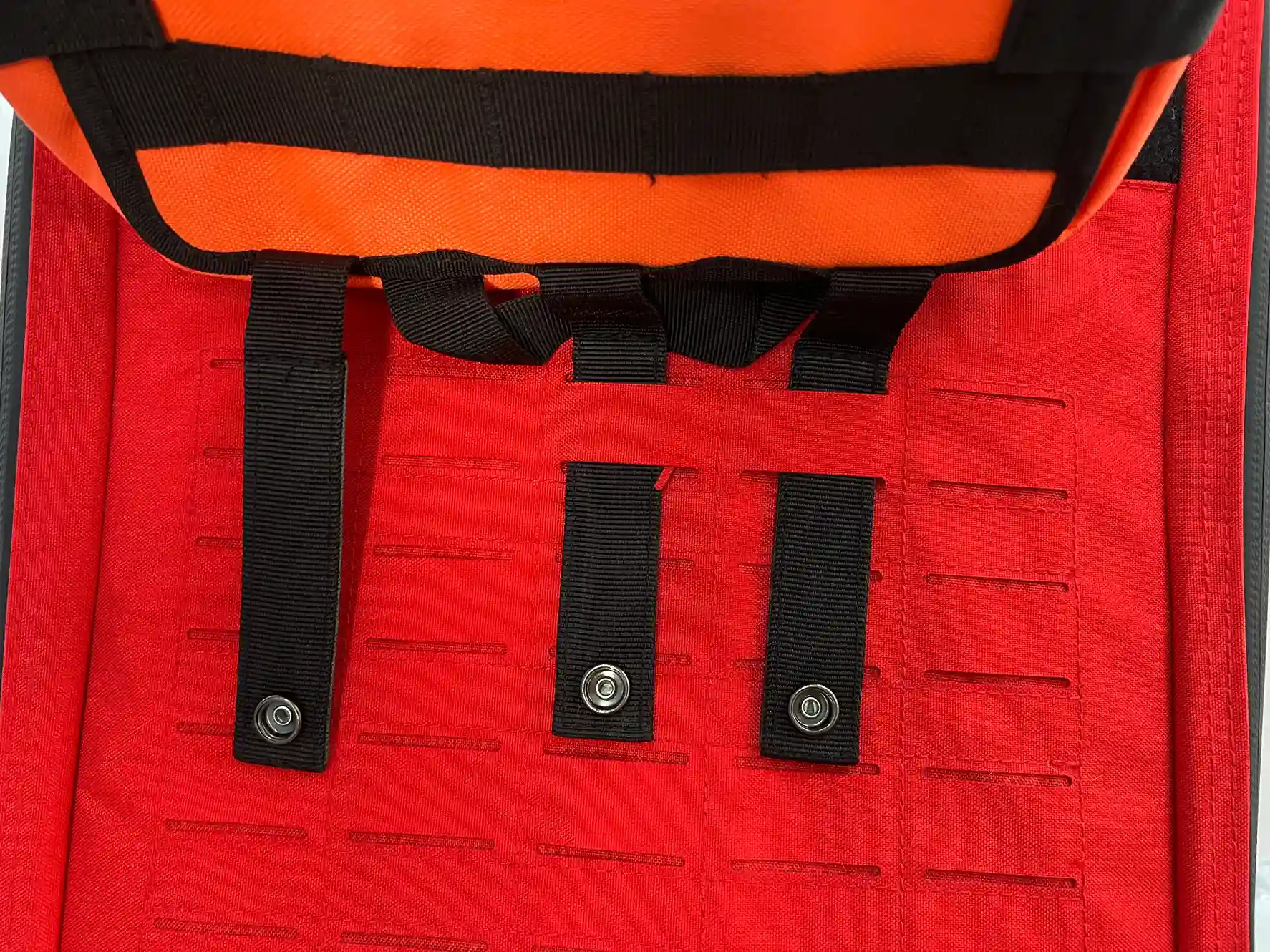
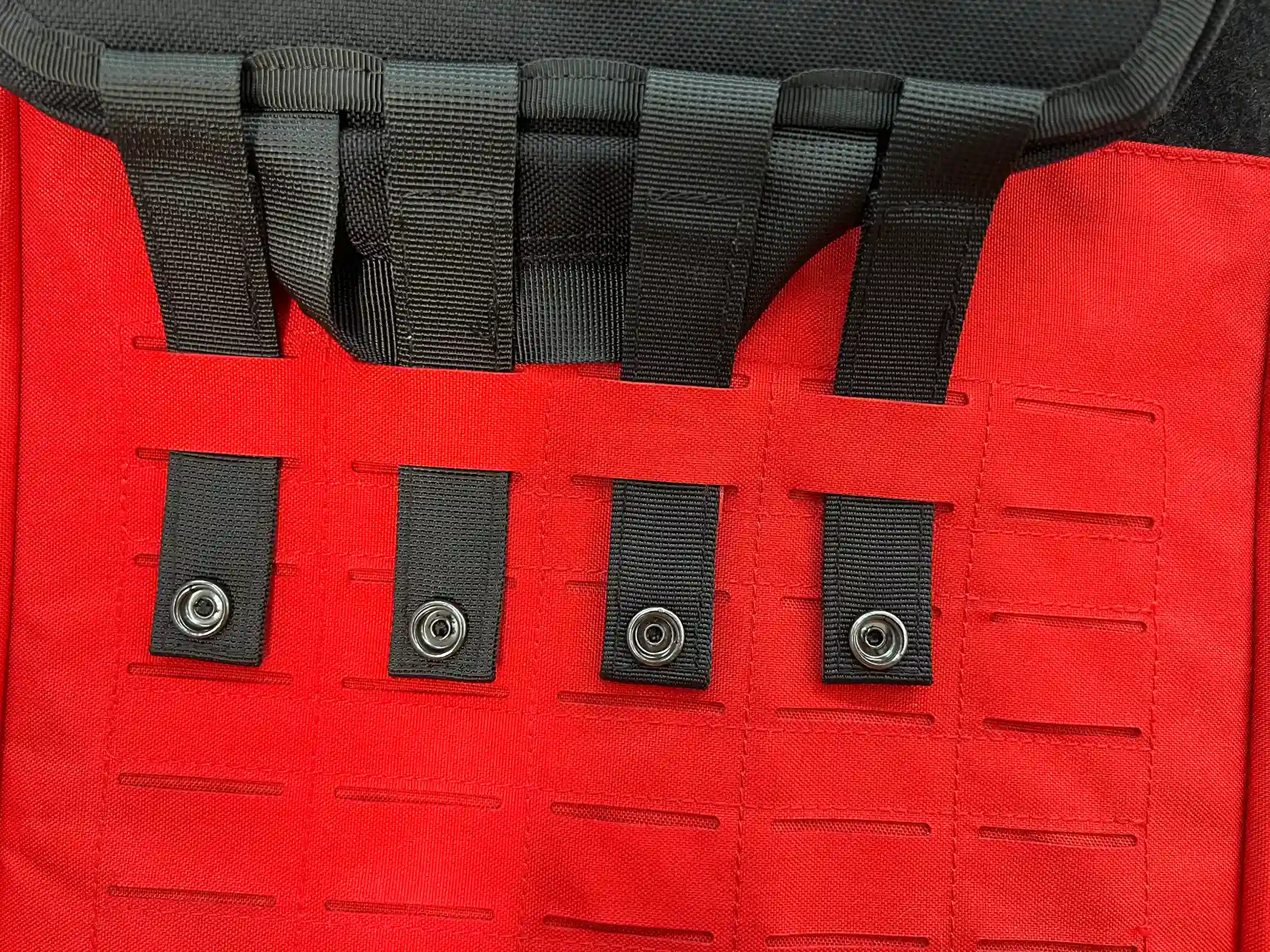
Special Note: The left image shows an accessory pouch with MOLLE webbing that does not meet international spacing standards, preventing it from attaching to standard MOLLE system pouches. The right image shows an accessory pouch that complies with international standards, allowing it to attach precisely to standard MOLLE system pouches.
In a firefight, a loose pouch means lost supplies. We must also look at hardware reliability. Standard plastic buckles shatter in the freezing temperatures of Eastern Europe. We use specific polymers tested for extreme cold to ensure the bag stays closed until you need it open.
The Care Under Fire (CUF) phase is about speed and gross motor skills.
External Tourniquet Storage: I have seen designs where the TQ is inside a zippered pocket. This is dangerous. The TQ must be grab-and-go.
Hardware Durability: A zipper failure here is catastrophic. We insist on YKK zippers because they resist sand and mud better than any generic brand.
Emergency Extraction: A modern medical pack should integrate a lightweight litter (stretcher) without adding bulk. This allows immediate evacuation capability without carrying a separate, heavy bag. Most suppliers ignore this, but professionals demand it.
Why must the internal layout map the MARCH?
Once the fire stops, the real medical work begins. Chaos still reigns, so structure is your safety net. Internal organization should physically represent the MARCH protocol. Medics must find Massive Hemorrhage and Airway tools by touch alone. We design compartments so the flow of supplies matches the flow of treatment, preventing cognitive overload.
Muscle memory is the key to performance under stress. Instructors have told me stories of medics opening a bag and freezing because they could not find the chest seal. The bag was a mess of pockets with no logic. At YEYETAC™, we design the interior to guide the medic through the procedure. We treat the backpack as a physical checklist. The layout forces the user to follow the correct order of treatment.
Can modularity save time during mass casualty events?
No two missions are the same. A static defense needs different gear than a rapid extraction. Rigid bags limit operational capability. We use tear-away panel systems that allow medics to detach specific modules and pass them to teammates. This innovation supports multi-casualty scenarios and lets the medic share the load without unpacking the entire kit.

Standard bags force the medic to stay with the bag. In a mass casualty event, this is inefficient. I have developed designs featuring internal panels held by heavy-duty hook and loop (Velcro).
Imagine a scenario with three wounded soldiers. With a standard bag, the medic runs between them.
With our modular design, the medic rips out the "Bleeding Control Panel" and throws it to a rifleman to help Soldier A. He rips out the "Airway Panel" for Soldier B. He keeps the main bag to treat Soldier C. This is "Advanced Tech" in the textile world. It requires precise manufacturing. The Velcro must be strong enough to hold heavy gear but not so strong that it fights the medic.
This design also helps with resupply. You do not need to restock individual bandages in the field. You simply swap out the empty panel for a full one back at base.
This saves hours of logistics time. Professional buyers look for this level of system thinking. It separates high-end tactical solutions from cheap copies.
What Medical Supplies Should Tactical Backpacks Accommodate?
Tactical medical backpacks must efficiently organize and protect a comprehensive range of save life equipment designed for treating combat injuries and trauma in austere environments.

How to Select the Right Tactical Medical Backpack Supplier?
When sourcing tactical medical backpacks for your business, choosing the right manufacturer makes all the difference between reliable field performance and costly equipment failures. Here's how to evaluate potential suppliers:
Request and test samples: Examine stitching at stress points, test zippers through multiple cycles, and verify MOLLE meets the standard 25mm × 40mm dimensions for proper equipment compatibility
Verify certifications and documentation: Look for suppliers who provide CE certification, FDA compliance records, and material performance test results that simplify customs clearance and regulatory approval
Assess customization flexibility: Quality manufacturers like YEYETAC™ offer private labeling, custom colorways, and organization configuration modifications without compromising on quality standards
Evaluate production capacity: Ensure the supplier can handle your order volume consistently while maintaining quality control, especially important for businesses needing reliable wholesale quantities
Check industry reputation: Research the manufacturer's standing with existing clients and their history of delivering consistent quality across multiple orders and product types
Conclusion
Tactical medical backpacks are not only equipment carriers, but also they're life support systems. Design elements that seem minor in backpacks become critical in combat. Contact us at support@tacticalmedicalkit.com to discover how our battlefield-tested designs can elevate your tactical medical capabilities.
FAQs
Why is the MOLLE system so important in tactical backpacks?
The MOLLE system represents the international standard for attachment compatibility, with precise 25mm×40mm that ensures interoperability with standardized tactical accessories worldwide, allowing users to customize their setup for specific missions.
How can wholesale distributors evaluate tactical backpack supplier quality?
Request sample testing, verify material specifications (like 1000D nylon), check certification documentation (CE/FDA), evaluate stitching quality especially at stress points, and test hardware components such as YKK zippers and UTX buckles under load conditions.
Why is internal design more important for medical tactical backpacks than standard tactical backpacks?
Medical tactical backpack internal design directly impacts emergency response efficiency, as well-designed organization systems can save critical seconds during threaten life situations by placing essential equipment in logical treatment sequence and ensuring immediate accessibility.
What key details should be considered when customizing tactical backpacks?
Focus on fabric strength ratings, waterproofing capabilities, reinforced stitching at connection points, modularity level, ergonomic design elements, and strategic brand logo placement with clear visibility while maintaining professional appearance.
Can tactical medical backpacks be customized with company logos or specific colors?
Yes, reputable manufacturers like YEYETAC™ offer customization options including embroidered logos, custom label placement, and specialized colorways for wholesale clients, helping distributors create distinctive product offerings.


Comments